

Whoa!
Solana moves fast and block explorers feel like telescopes for on-chain life.
I opened Solscan first out of curiosity and then kept digging because it actually answered questions I had in plain terms.
At first glance it looked like another explorer, though the way it surfaces NFT metadata and token activity made me rethink how I track collections and provenance—so my approach changed.
This piece is a mix of hands-on notes, small annoyances, and some real tips that I wish someone had told me when I started.
Wow!
Tracking NFTs on Solana is not the same as tracking them on Ethereum.
Transactions are faster, and that shifts how you interpret activity signals.
Initially I thought a flurry of trades meant a floor pump, but then realized bot activity and micro-transfers often inflate those patterns, so context matters.
My instinct said to watch token holders and program interactions, not just recent sales.
Seriously?
Yes—because Solana’s account model and program-centric UX change the meaning of on-chain traces.
I got burned once by misreading an airdrop transaction as a sale, and that taught me to look at program logs more carefully.
Actually, wait—let me rephrase that: program logs are the single most useful thing to check after a mint or transfer if you want to understand what truly happened.
(Oh, and by the way… sometimes the explorer UI hides a log or two behind “more” menus, so poke around.)
Hmm…
Solscan’s NFT pages combine metadata, owners list, and historical transfers in a way that feels human-friendly.
The token holder distribution charts give quick signals about concentration risk.
On one hand a low number of owners hints at centralization; though actually, some projects purposely hold reserves for future drops, and those look scary until you read the contract.
So check both the holder list and the program address to see if “team wallets” are obvious custody lines.
Whoa!
I use Solscan as a primary tool for due diligence before minting or buying from secondary markets.
The explorer shows recent signatures, which helps me identify wash trades or suspicious wash-like behavior, and that matters when you’re trying to avoid artificially inflated floors.
Initially I thought wash trades were obvious, but many are subtle—small volumes across many wallets can look organic though they aren’t.
You learn patterns by seeing many of them; that’s how you build a gut feeling for what’s real versus what’s staged.
Really?
Yes, and here’s a practical tip: follow token movement, not just price.
When an NFT shifts through multiple wallets in quick succession without a marketplace fee recorded, that usually means off-market movement or scripted transfers.
I’m biased, but Solscan’s transaction timeline with program calls is one of the better ways to spot that behavior quickly.
Somethin’ else that bugs me sometimes is metadata mismatches—Solscan surfaces those too, so you can confirm on-chain URI hashes against hosted assets.
Wow!
If you’re building tooling or alerts, Solscan’s API and address-level views make it easy to create monitors for mints, transfers, or suspicious patterns.
I built a simple notifier that flags top-holder changes and abnormal transfer volumes, and it saved me from buying into a manipulated floor.
On the technical side, keep in mind RPC responses differ by provider; retries and caching are very very important when you’re scraping activity at scale.
The explorer helps with sampling and testing your heuristics before you commit resources to a pipeline.
Whoa!
Check this out—I bookmarked the Solscan official page as my quick reference whenever I want to deep-dive on a collection; you can find it here.
That single bookmark replaced several scattered tabs for me.
I’ll be honest: no explorer is perfect, and Solscan sometimes lags on indexing newly minted metadata during high throughput windows, but overall it’s responsive and the UI is sensible.
If you use it often, customize your workflow: use the address watchlist and export CSVs for off-chain analysis.
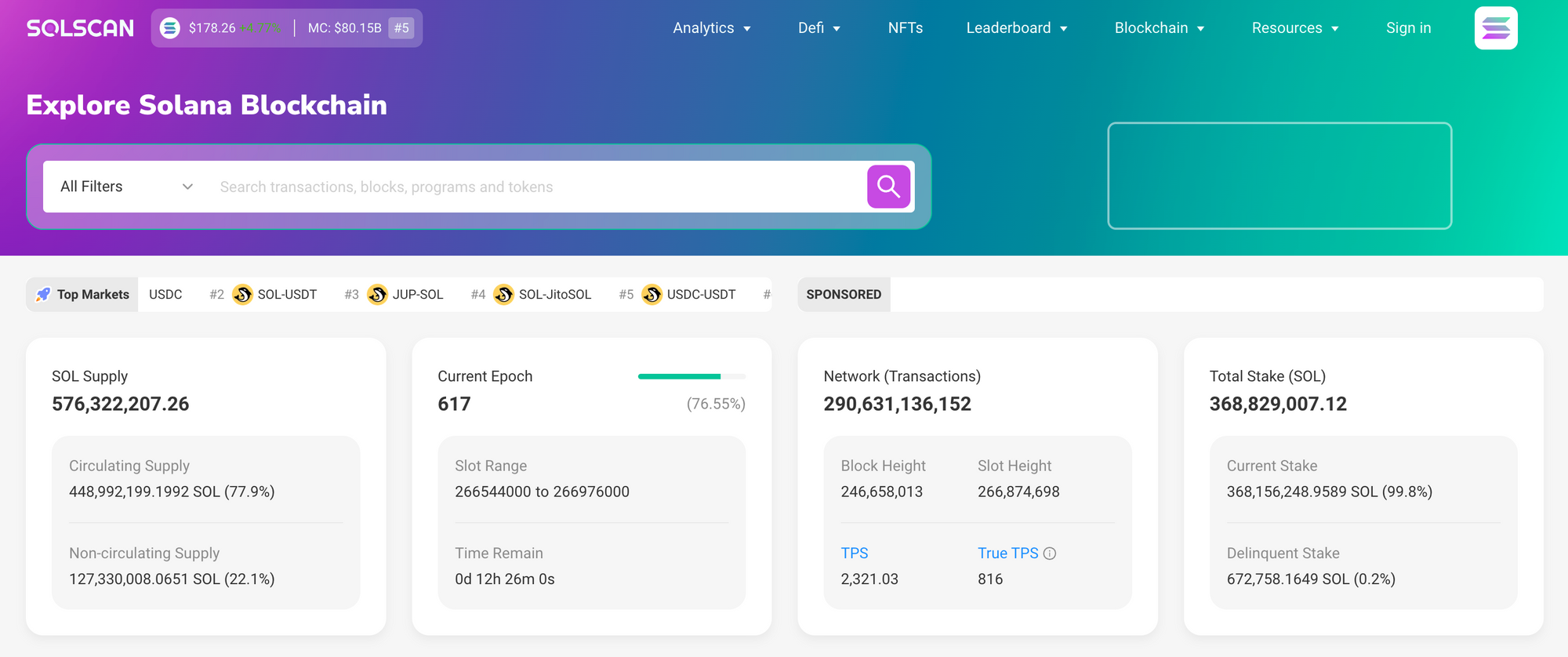
How I Use Solscan as an NFT Tracker (Practical Steps)
Okay, so check this out—start by looking at the token page.
Read the metadata URI, then cross-check the JSON-hosted properties when you can.
Next, scan the holders list and export it if you need to analyze concentration or identify potential team wallets.
Then open a few recent transactions and inspect the program logs to see which marketplace or program handles the swaps (this reveals a lot about fee structure and marketplace routing).
If something looks off, trace the token history back at least 20 transfers to see the transfer pattern—many scams show up within that window.
Here’s the thing.
Alerts are lifesavers; set them for new mints from a program, or for owner count shifts.
I use Slack for small alerts and a separate DB for richer analytics, though you can do a lot with exported CSVs.
On one project I tracked, a sequence of tiny transfers preceded a dump—if I hadn’t set a watch on holder churn, I would’ve missed it.
So, make alerts your friend; but tune them to reduce noise, otherwise you’ll ignore the good alerts with the bad ones.
Also—small note.
Token verification badges on Solscan help, but they are not gospel.
Some legit projects go unverified for a while and some verified tags lag behind community reports.
So use verification as one input among several.
Double-check project socials, program source (if available), and the initial mint allocation patterns.
FAQ — Quick practical answers
How do I spot wash trading on Solana using Solscan?
Look for rapid trades with low fees, repetitive patterns across a cluster of wallets, and transfers that don’t incur marketplace fees; inspect the program log to see if swaps went through a marketplace program or were direct account transfers—those clues combined make wash patterns clearer.
Can Solscan be used to monitor a collection in real time?
Yes—use address and program watches, leverage their API or UI alerts, and combine exports with simple scripts; just be ready for occasional indexing lags during network congestion and plan retries when building automation.
Is metadata always reliable on Solscan?
Not always; metadata can be off-chain and mutable, so verify URIs and JSON hashes whenever provenance matters—Solscan surfaces the hashes which helps you compare on-chain references to hosted assets.